
Solar String Design - Complete Guide to PV String Design
When planning a solar PV system, you may come across terms such as solar string design, PV string design, or string design for solar panels. These terms refer to how solar panels are arranged and connected electrically before being connected to the inverter. In this guide, we explain solar string design, why it matters, how temperature and shading affect it, and how strings are matched with inverter MPPT inputs.
In this post, we will talk about what string design means, why it is important, how PV String Design works, and how it fits into overall Solar System Design. Let's keep it easy and practical.
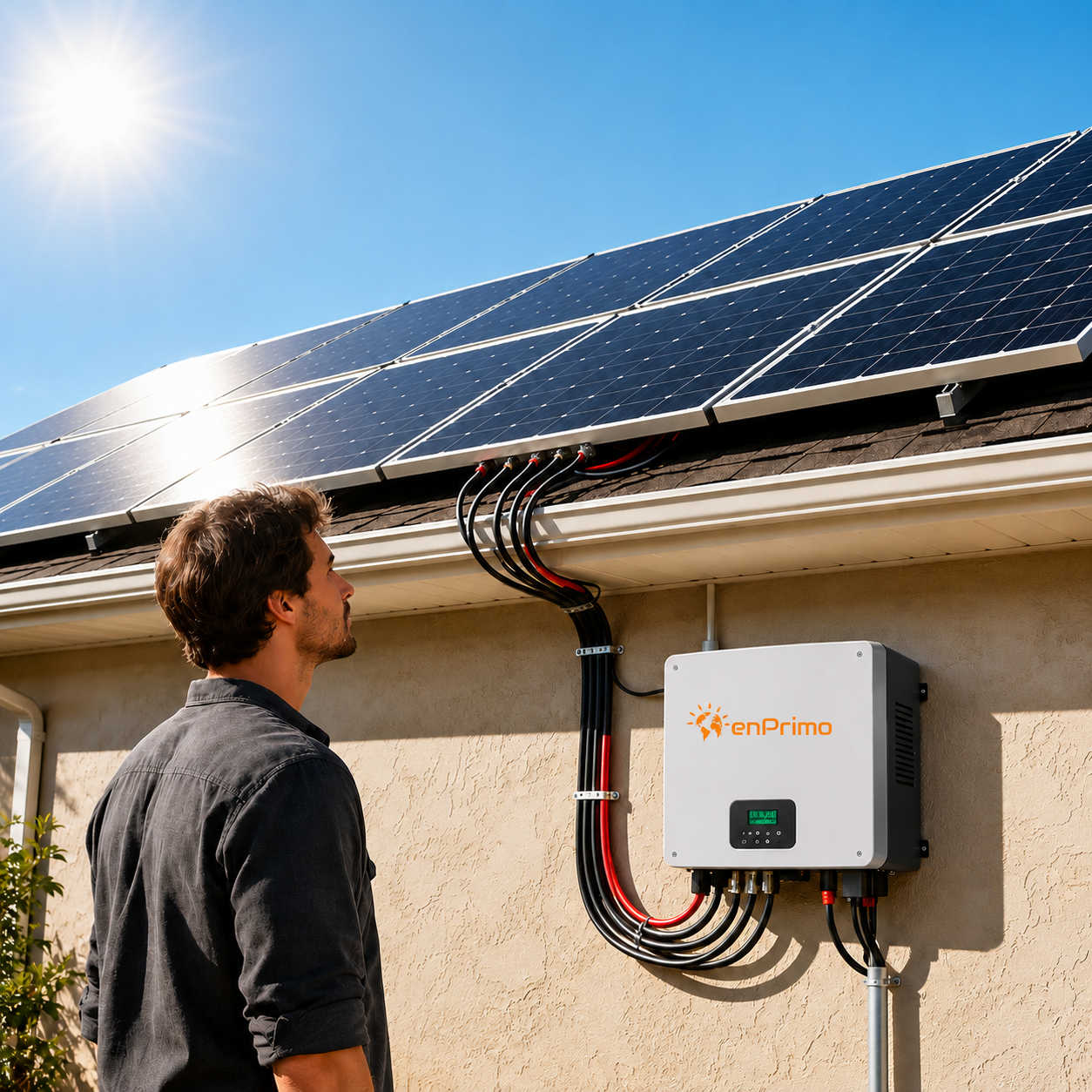
What is String Design in Solar?
A string is simply a group of solar panels connected one after another in a line (in series).
When panels are connected in series:
- The voltage of each panel adds together
- The current remains approximately the same as the current of the string
String Design (or Solar String Design) means deciding:
- How many panels should be connected in one string
- How many strings are required
- How those strings should be connected to the inverter's MPPT inputs
Good solar string design helps your system produce maximum power safely and efficiently.
Why is Solar String Design So Important?
If the string design is wrong, several problems can occur:
- The inverter may not start properly under certain conditions
- Voltage can become too high on cold days and damage the inverter
- Voltage can become too low on hot days and reduce power
- Shading on one panel can affect the whole string
- The system may not generate the expected units
That is why proper PV String Design is an important part of good Solar System Design.
Simple Explanation of Series Connection
Think of solar panels like batteries in a Chain.
When panels are connected in series:
- Voltage increases as the panel voltages add together
- Current remains approximately the same as the current of an individual panel
Example: if one solar panel has a voltage of around 40 volts at its operating point, 10 panels connected in series could produce around 400 volts under those operating conditions.
The actual voltage varies with factors such as temperature, irradiance, and the panel's electrical characteristics.
How Temperature Affects Solar String Design
Temperature plays a big role in Solar String Design:
Cold weather → Solar panel voltage increases
Hot weather → Solar panel voltage decreases
Designers use the panel's temperature coefficient (given in the datasheet) and local minimum and maximum temperatures to calculate safe string length.
In India, temperatures vary a lot from north to south and from plains to hills. Good design always considers the local climate.
For projects where site conditions, roof layout, shading or equipment placement need to be assessed, a technical and site visit can help collect the information required for system design.
Main Things Checked in String Design
Professional designers check these important points:
Maximum Voltage (Cold Weather Check)
On cold mornings, panel voltage goes up. The total string voltage must stay below the inverter's maximum DC input voltage. This is a safety limit.
Minimum Voltage (Hot Weather Check)
On hot days, panel voltage goes down. The string voltage must stay above the inverter's minimum MPPT voltage so the inverter can track power properly.
Current Limit
The current of the string (or parallel strings) should not exceed what the inverter MPPT can handle.
Number of MPPTs
Most modern inverters have two or more MPPTs. Different roof directions can be connected to different MPPTs.
Simple Steps in PV String Design
Here is how designers typically plan a PV string configuration:
Note the panel's Voc (open circuit voltage) and Vmp (maximum power voltage).
Note the inverter's maximum DC voltage and MPPT voltage range.
Calculate maximum number of panels per string for coldest expected temperature.
Calculate minimum number of panels per string for hottest expected temperature.
Choose a practical number of panels between the minimum and maximum.
Decide how many such strings are needed for the total system size.
Match the strings appropriately with the inverter's MPPT inputs.
The final configuration should also consider the inverter manufacturer's specifications, panel characteristics, system layout, cable sizing, and applicable electrical requirements. Once the PV strings have been installed, the configuration and electrical parameters can be verified during inverter commissioning.
String Design and Shading
Shading is an important consideration in solar string design.
If one panel in a string gets shade (from a tree, chimney, or nearby building), the current of the whole string drops. This reduces power from all panels in that string.
To reduce this problem:
- Keep panels with similar orientation and tilt in the same string
- Use different MPPTs for different roof directions
- In some cases, power optimizers or microinverters are used
Parallel Strings in Solar Systems
Sometimes multiple strings are connected in parallel to increase current while keeping voltage the same.
When doing this:
- All parallel strings should have the same number of panels
- Cable size must be chosen carefully for higher current
- Proper fuses or breakers are needed for safety
How String Design Fits into Solar System Design
Solar System Design includes many different aspects, such as:
String design is one of the most important electrical parts of the full system design. A good designer matches the panels and inverter properly through correct string configuration. String design should also be considered before solar inverter installation, so that the planned PV configuration matches the inverter's voltage, current and MPPT requirements.
Benefits of Good Solar String Design
A properly designed string configuration can help provide:
- Higher energy generation
- Safer system operation
- Longer life of inverter and panels
- Better performance in different weather
- Smooth working with the monitoring app
Common Mistakes in String Design
Some common string design mistakes include:
- Ignoring the effect of temperature on panel voltage
- Putting too many panels in one string
- Mixing different panel types or orientations in the same string
- Not matching the inverter MPPT range
- Using thin cables for long strings
These mistakes can reduce system performance and may create electrical or equipment-related risks.
Tips for Homeowners
Before finalizing your solar installation, consider these tips:
- Always ask the installer to show the string design
- Check that panels facing different directions are on separate MPPTs if possible
- Make sure the design considers your local temperature range
- Prefer installers who use proper design software or calculation methods
Final Words
String Design, string design solar panels, and Solar String Design may sound technical, but the basic idea is simple. It is about connecting the right number of panels in series so that the voltage stays safe and the inverter works at its best. Good PV String Design is a very important part of overall Solar System Design. When done correctly your solar system will generate units. Your solar system will run safely. Your solar system will last longer.
Always work with an installer. A knowledgeable installer takes time to design the strings, for your panels your inverter and the local weather conditions. A planned string design is one of the quiet reasons why some solar systems perform better than others. Take it seriously ask questions and you will enjoy results, from your solar investment for many years.
Frequently Asked Questions (FAQs)
Common questions about String Design, string design for solar panels, and Solar String Design.
Contact Us Solar String Design
PV String Design
Series Connection
Parallel Strings
Solar System Design
Solar String Design
PV String Design
Series Connection
Parallel Strings
Solar System Design

Need Our Services?
Call: +91 7349150222
Work Hours
Mon to Sat 9:30 am-6:00 pm
Email Us
admin@enprimo.in