
Creating a utility-scale solar plant involves careful planning and selecting the right technology. Choosing the right inverter is essential for converting the DC electricity generated by solar panels into usable AC electricity. The right utility-scale solar inverter can help improve energy conversion, support efficient plant operation and simplify maintenance.
Selecting the right inverter can help solar developers, EPC contractors and plant owners manage energy generation, reduce unnecessary downtime and improve long-term plant performance.
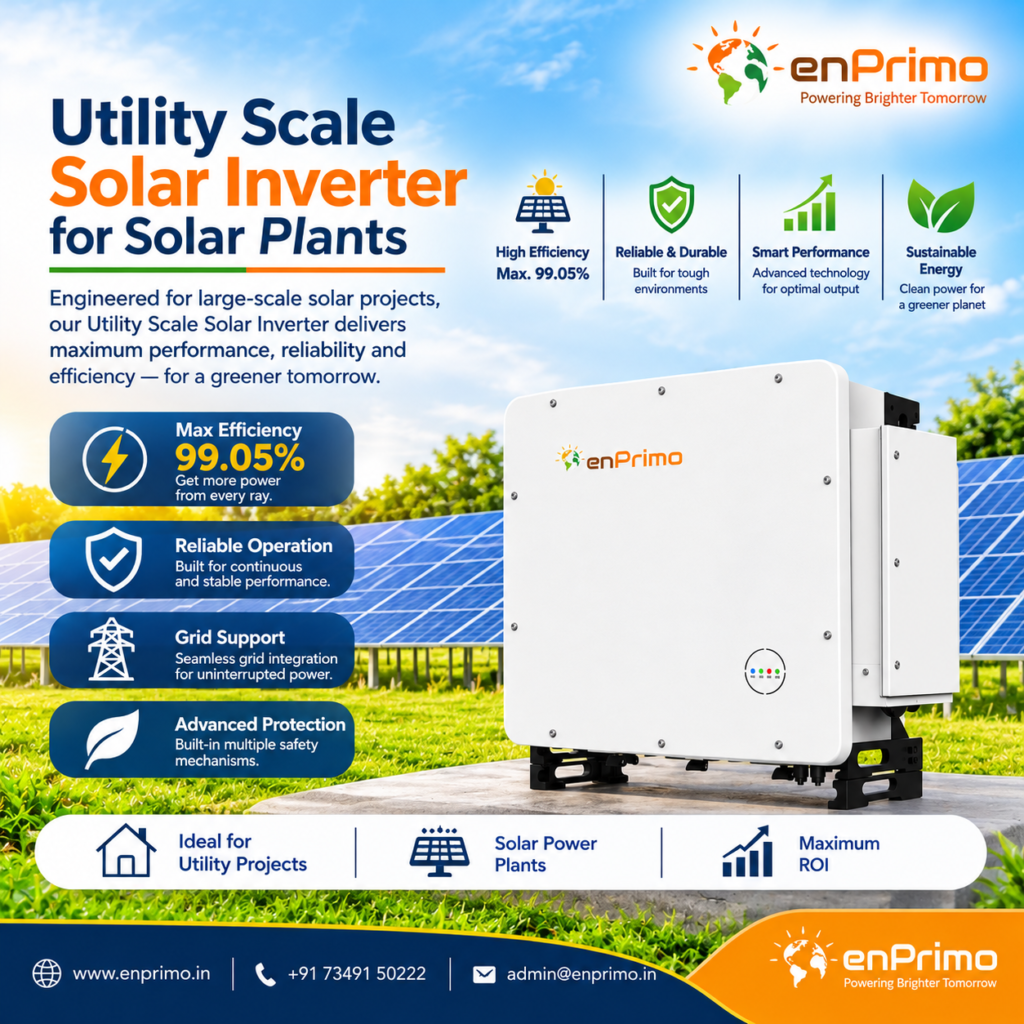
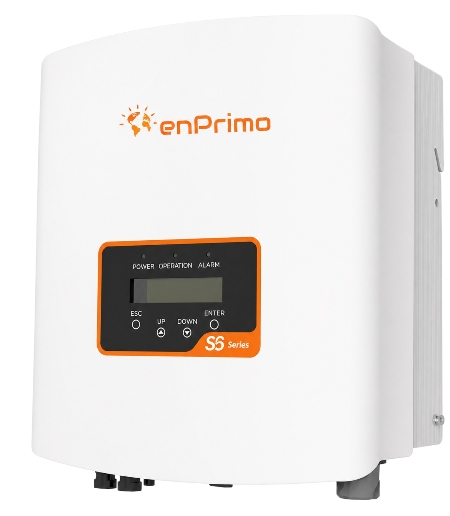
For utility-scale applications, the enPrimo 350kW Solar Inverter, model ENP-GU350K-G2, is designed to support high-capacity solar projects. Its stated features include high conversion efficiency, multiple MPPTs, protection functions and intelligent monitoring.
Below is a breakdown of the key factors to consider when choosing the right utility inverter for your solar power plant.
1. Know Your Power Requirements
Understanding the total capacity of your solar project is the first step in selecting the right inverter. The size of the solar plant, installed solar panel capacity, expected energy generation and grid connection requirements all influence inverter selection.
Multi-megawatt solar plants may use several high-capacity string inverters. This approach can provide flexibility in system design and help simplify maintenance by allowing individual inverters to be serviced when required.
Consider the following factors when choosing your inverter:
- Total DC capacity of the solar panels.
- Required AC output capacity.
- Expected ambient temperature at the installation site.
- Grid connection and transformer requirements.
- Future expansion and maintenance requirements.
The enPrimo 350kW Solar Inverter can be considered for larger solar projects, subject to the project’s technical requirements. The number of inverters required should be calculated based on the total DC capacity, DC-to-AC ratio, AC export limit and site-specific design conditions.
2. Check Inverter Efficiency
Efficiency is one of the main factors to consider when selecting a utility-scale solar inverter. Solar panels generate direct current (DC) electricity, which the inverter converts into alternating current (AC). Some energy is lost during this conversion process.
A higher inverter efficiency can reduce conversion losses and help deliver more usable electricity. However, it is also important to evaluate performance at different operating loads because a solar plant does not operate at full capacity throughout the day.
The enPrimo ENP-GU350K-G2 inverter is specified with a maximum efficiency of 99.05% and a European efficiency of 98.80%. These figures should be checked against the latest official product datasheet before publication.
When comparing utility inverters, consider the following:
- Maximum conversion efficiency.
- European or weighted efficiency.
- Efficiency at different operating loads.
- Expected operating conditions at the project site.
For solar developers and EPC contractors, even small differences in conversion efficiency can affect energy yield over the lifetime of a project. Evaluating efficiency alongside other technical and operational factors helps support a more informed decision.
3. Evaluate DC Voltage and MPPT Configuration
DC voltage compatibility and MPPT configuration play an important role in utility inverter selection.
MPPT stands for Maximum Power Point Tracking. This technology enables an inverter to adjust its operating point to extract available power from the connected solar panels under changing operating conditions.
Utility-scale solar plants may experience variations in irradiance, shading, soiling and solar string conditions. Multiple independent MPPTs can provide greater flexibility when designing solar arrays with different orientations or operating conditions.
According to the supplied product specifications, the enPrimo 350kW Solar Inverter supports 1500V DC systems and features six independent MPPTs. Each MPPT is specified with a maximum current of 75A, with 30 string inputs for the inverter.
These features may provide flexibility for EPC contractors when designing solar arrays. However, the solar string configuration must always comply with the inverter’s specified operating voltage, input current and short-circuit current limits.
Before finalising an inverter, check:
- The solar array’s operating voltage range.
- Maximum input current and short-circuit current limits.
- Number of independent MPPTs.
- Number of supported string inputs.
- Compatibility with the selected solar modules.
Explore the enPrimo utility-scale solar inverter range to review the product information relevant to your project.
4. Consider Temperature and Environmental Protection
Utility-scale solar plants often operate in demanding outdoor environments. Some locations experience high summer temperatures, heavy rainfall, dust or high humidity. These conditions can affect inverter performance and long-term reliability.
When choosing a utility inverter, evaluate its enclosure protection rating, cooling system and specified operating temperature range.
The supplied specifications for the enPrimo ENP-GU350K-G2 inverter state that it has an IP66 enclosure rating, an operating temperature range of -30°C to 60°C and intelligent air cooling. Verify these details against the official datasheet before publishing.
It is also important to understand temperature-related power derating. According to the supplied draft, the inverter’s nominal AC output is specified as:
- 352kW at 30°C.
- 320kW at 40°C.
- 310kW at 50°C.
These figures should be confirmed against the manufacturer’s derating curve and operating conditions.
When evaluating environmental suitability, consider:
- Expected ambient temperatures at the project site.
- Cooling requirements and airflow.
- Dust and water ingress protection.
- Installation clearance and mounting requirements.
- Accessibility for inspection and maintenance.
Understanding site conditions and temperature derating helps engineers select and configure equipment appropriately for the intended installation.
5. Review Safety and Protection Features
Safety is an essential consideration when selecting a utility-scale solar inverter. These installations involve high DC voltages and substantial electrical power, so the inverter’s protection functions must match the project’s design and applicable requirements.
Important protection features to evaluate include:
- DC reverse-polarity protection.
- AC short-circuit protection.
- Anti-islanding protection.
- DC and AC surge protection.
- PV insulation and residual-current monitoring.
- DC terminal temperature monitoring.
The original product information identifies Type II DC and AC surge protection for the enPrimo 350kW Solar Inverter. Other protection features should be included in product-specific claims only after they have been confirmed against the official datasheet.
Grid compatibility is equally important. The inverter must meet the applicable grid code, utility interconnection requirements and project specifications. Engineers should evaluate voltage regulation, power factor control and response to grid disturbances.
Selecting an inverter with suitable protection and grid-support capabilities helps EPC contractors develop safer, more reliable solar power systems.
6. Evaluate Intelligent Monitoring and Ease of Maintenance
Utility-scale solar plants can contain thousands of solar modules and multiple inverters. Without effective monitoring, identifying faults or underperforming areas can become difficult.
A suitable utility inverter should provide the monitoring information needed to evaluate operation, identify issues and support maintenance activities.
Important monitoring features include:
- PV string current monitoring.
- Fault notifications and operational alerts.
- Performance and operating data.
- Communication with plant monitoring systems.
- Access to relevant technical information.
The supplied specifications for the enPrimo ENP-GU350K-G2 inverter list RS485 communication, Bluetooth, app-based monitoring and PLC communication capability. Confirm the availability and configuration of these functions using the current product documentation.
Before selecting an inverter, check whether its communication interfaces are compatible with the project’s data logger and SCADA system.
Also consider remote access requirements, the availability of operating data, technical support and the process for diagnosing faults. Effective monitoring can help maintenance teams identify issues more quickly and support better plant management.
7. Compare Overall Lifecycle Costs
The lowest-priced inverter is not necessarily the most cost-effective choice for a solar plant. The purchase price is only one part of the total cost of owning and operating the equipment.
A suitable inverter should be evaluated based on energy yield, maintenance requirements, warranty terms, replacement costs and available technical support.
An inverter with high conversion efficiency, useful diagnostic functions and appropriate protection may help reduce certain operating costs. Actual savings will depend on system design, site conditions, operating practices and maintenance requirements.
Consider the following factors when comparing utility inverters:
- Warranty coverage and service support.
- Availability of replacement parts.
- Routine maintenance requirements.
- Expected energy yield and conversion efficiency.
- Manufacturer documentation and technical assistance.
- Operating, repair and replacement costs.
Comparing these factors helps solar developers and EPC contractors evaluate the long-term value of different inverter options rather than focusing only on the initial purchase price.
Why Choose the enPrimo 350kW Solar Inverter?
The enPrimo ENP-GU350K-G2 inverter is designed for utility-scale solar applications. Its stated specifications include high conversion efficiency, multiple MPPTs, environmental protection and monitoring features.
Key product specifications from the supplied draft include:
- 350kW class: Intended for consideration in larger solar plant designs, subject to project requirements.
- 99.05% maximum efficiency: Specified maximum DC-to-AC conversion efficiency.
- 1500V DC: Supports the stated DC system voltage.
- Six independent MPPTs: Provides flexibility for solar array configuration.
- 30 string inputs: Supports multiple PV string connections.
- IP66 enclosure: Provides the stated level of dust and water ingress protection.
- Intelligent monitoring: Supports plant monitoring and operational visibility through the specified communication options.
All product specifications should be confirmed against the latest official datasheet before publication.
The right inverter configuration will depend on the solar modules, site conditions, grid requirements, DC-to-AC ratio and overall project economics. Consulting the project’s technical team and reviewing the product documentation can help determine whether the inverter is suitable for the intended application.
For further details, visit the enPrimo Utility Inverters page.
Conclusion
Choosing the right utility-scale solar inverter is an important step in developing an efficient and reliable solar power plant. Factors such as capacity, conversion efficiency, DC voltage, MPPT configuration, environmental protection, grid compatibility, monitoring and lifecycle costs should all be considered during the selection process.
The enPrimo 350kW Solar Inverter offers stated features intended for utility-scale solar applications, including high conversion efficiency, multiple MPPTs, protection and monitoring capabilities. Evaluating these features against project-specific requirements can help solar developers and EPC contractors make informed equipment decisions.
Careful inverter selection, appropriate system design and regular maintenance can help support long-term solar plant performance.
For product specifications and further information, visit the enPrimo Utility Inverters page.
Frequently Asked Questions
1. What is a utility inverter?
A utility inverter is a high-capacity inverter used to convert DC electricity generated by solar panels into AC electricity for grid-connected solar power plants.
2. How do I choose the right inverter for my utility-scale solar plant?
Consider plant capacity, inverter efficiency, DC voltage range, MPPT configuration, grid compliance, protection features, environmental conditions, monitoring capabilities, warranty support and lifecycle costs. The final selection should be based on the project’s technical requirements and engineering design.
3. What are the benefits of using the enPrimo 350kW Solar Inverter?
According to the supplied product specifications, the enPrimo ENP-GU350K-G2 inverter offers a maximum efficiency of 99.05%, supports 1500V DC systems, features six independent MPPTs and 30 string inputs, and has an IP66-rated enclosure and monitoring capabilities. Confirm these specifications against the official product datasheet before publication.
4. Why are MPPTs important in a solar inverter?
MPPTs help a solar inverter extract available power from solar panels under changing operating conditions. Multiple independent MPPTs can provide greater flexibility when connecting solar strings with different orientations or operating characteristics, subject to the inverter’s design limits.
5. Will a 350kW inverter work on a multi-megawatt solar plant?
Yes. Multiple inverters in the 350kW class may be used in a multi-megawatt solar plant. The number required depends on the solar array capacity, DC-to-AC ratio, AC export limit, site conditions and engineering design.
6. Why is an IP66 rating important for a utility inverter?
IP66 indicates that an enclosure is dust-tight and protected against powerful water jets under the specified test conditions. This can be valuable for outdoor solar installations exposed to dust and rain. Correct installation and maintenance are still necessary for reliable operation.
7. Does inverter efficiency affect solar plant performance?
Yes. Inverter efficiency affects how much of the DC electricity generated by solar panels is converted into AC electricity. Higher conversion efficiency can reduce conversion losses, but actual plant performance also depends on operating load, temperature, system design and other site conditions.